Which Straw Hats Have Devil Fruits? All 10 Crew Members Compared
Four Straw Hats have Devil Fruits: Luffy, Chopper, Robin and Brook. Compare all ten members, with Luffy's Wano fruit-name reveal separately marked.
Four of the ten Straw Hats have eaten Devil Fruits: Luffy, Chopper, Robin and Brook. Zoro, Nami, Usopp, Sanji, Franky and Jinbe have no confirmed Devil Fruit in the story through the end of Wano.
That distinction helps explain a crew where rubber limbs, sprouting arms, weather weapons and cyborg lasers can all appear in the same fight. An unusual ability doesn’t automatically come from a fruit.
Spoiler boundary: the main guide reveals the full ten-member crew, Brook’s backstory and abilities shown by the post-time-skip era. Luffy’s Wano fruit-name reveal is in a separately marked section near the end. No Egghead or Elbaph developments are covered. Linked official profiles can contain later spoilers.
Which Straw Hats have Devil Fruits?
The table uses Luffy’s familiar early-story fruit name. The official Straw Hat directory lists fruit names for these four members; their individual profiles explain the abilities.
| Straw Hat | Devil Fruit? | Fruit or fighting style |
|---|---|---|
| Monkey D. Luffy | Yes | Gomu Gomu no Mi — Gum-Gum Fruit; see the marked Wano section for its other name |
| Roronoa Zoro | No | Swordsmanship |
| Nami | No | Navigation knowledge and Clima-Tact weather weapons |
| Usopp | No | Sniping, inventions and Pop Green ammunition |
| Sanji | No | Martial arts built around powerful kicks |
| Tony Tony Chopper | Yes | Hito Hito no Mi — Human-Human Fruit |
| Nico Robin | Yes | Hana Hana no Mi — Flower-Flower Fruit |
| Franky | No | Cyborg body and built-in weapons |
| Brook | Yes | Yomi Yomi no Mi — Revive-Revive Fruit |
| Jinbe | No | Fish-Man Karate |
This is a roster reference, not a power ranking. The six non-users still bring skills the voyage depends on. For the membership milestones behind the table, use the crew join-order guide.
The four fruit users
Luffy: Gomu Gomu no Mi
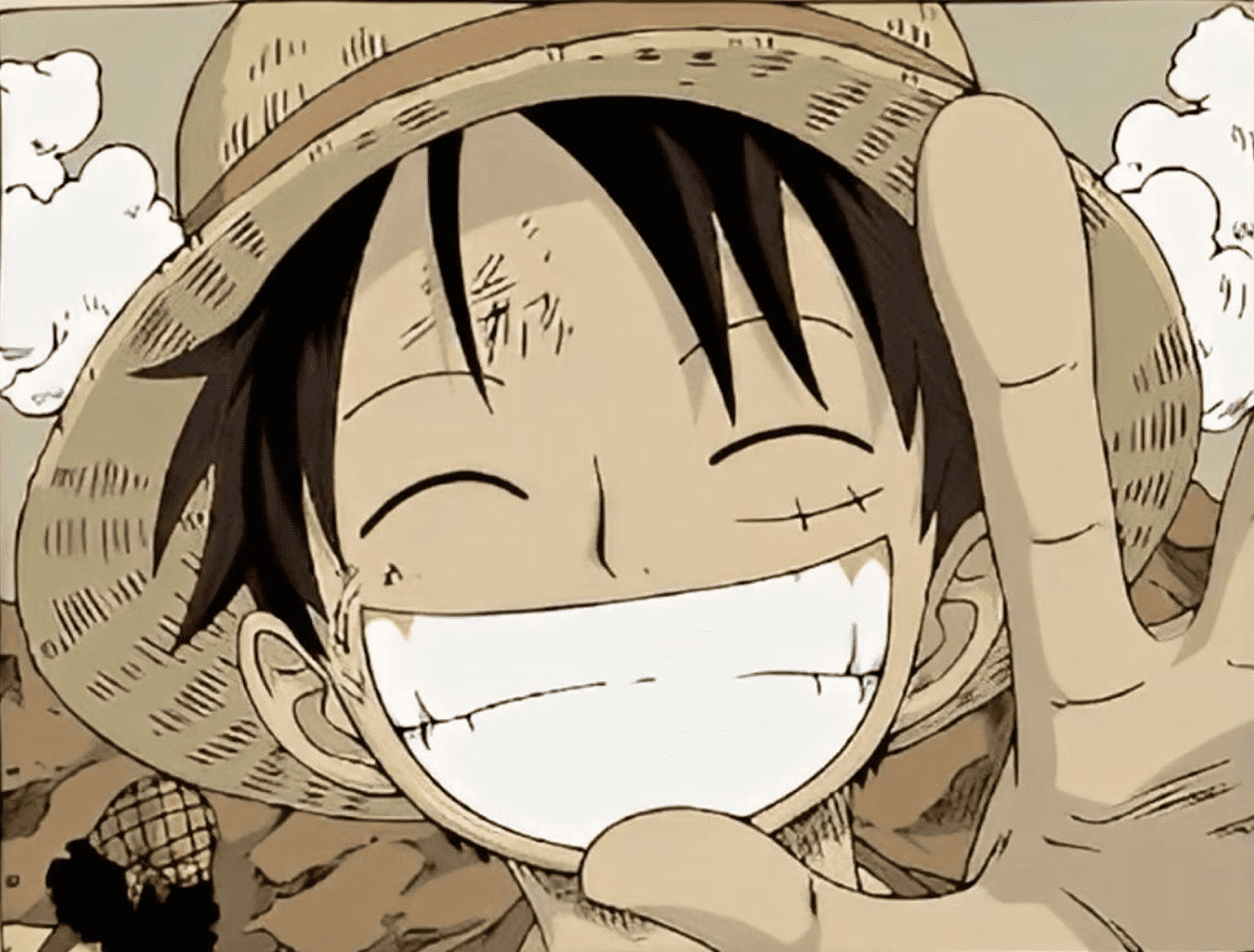
Luffy’s body stretches like rubber. That is the basic ability introduced under the name Gomu Gomu no Mi, commonly rendered in English as the Gum-Gum Fruit.
His official profile describes him developing that ability into techniques such as the Gears. It also discusses Haki separately: Luffy has both fruit powers and Haki, rather than one being another name for the other.
The familiar name is enough to identify his row in the main table. Readers who have reached Wano can find the later naming explanation below.
Chopper: Hito Hito no Mi
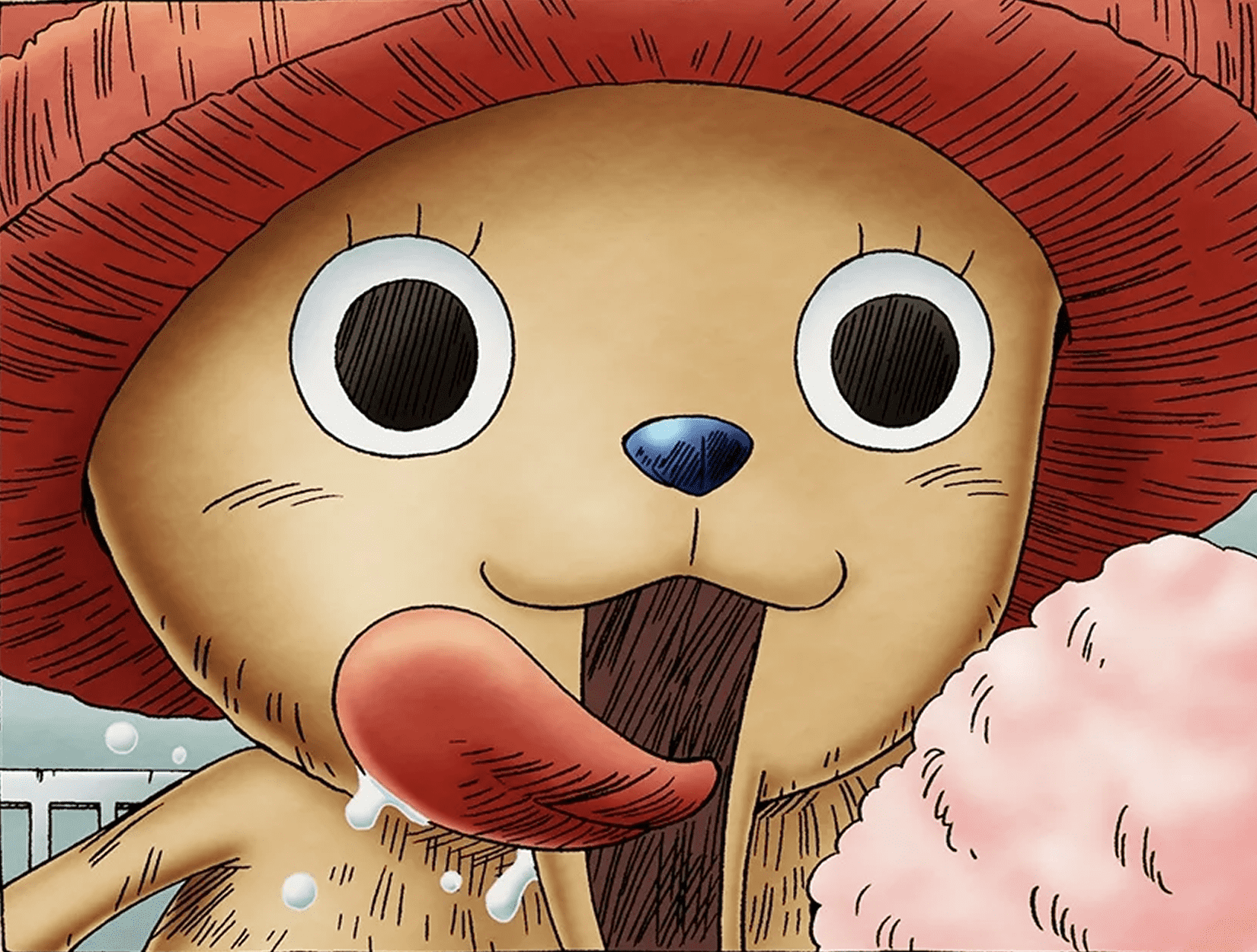
Chopper is a reindeer who ate the Human-Human Fruit, not a human who ate a reindeer fruit. His official profile explicitly describes that starting point.
The fruit gives him human abilities and transformations. His Rumble Balls and research help him use his forms in different ways; they aren’t additional Devil Fruits. The profile describes both his basic transformations and the changes he developed through training.
That distinction matters when counting the crew’s fruits: several forms still belong to one user and one fruit.
Robin: Hana Hana no Mi
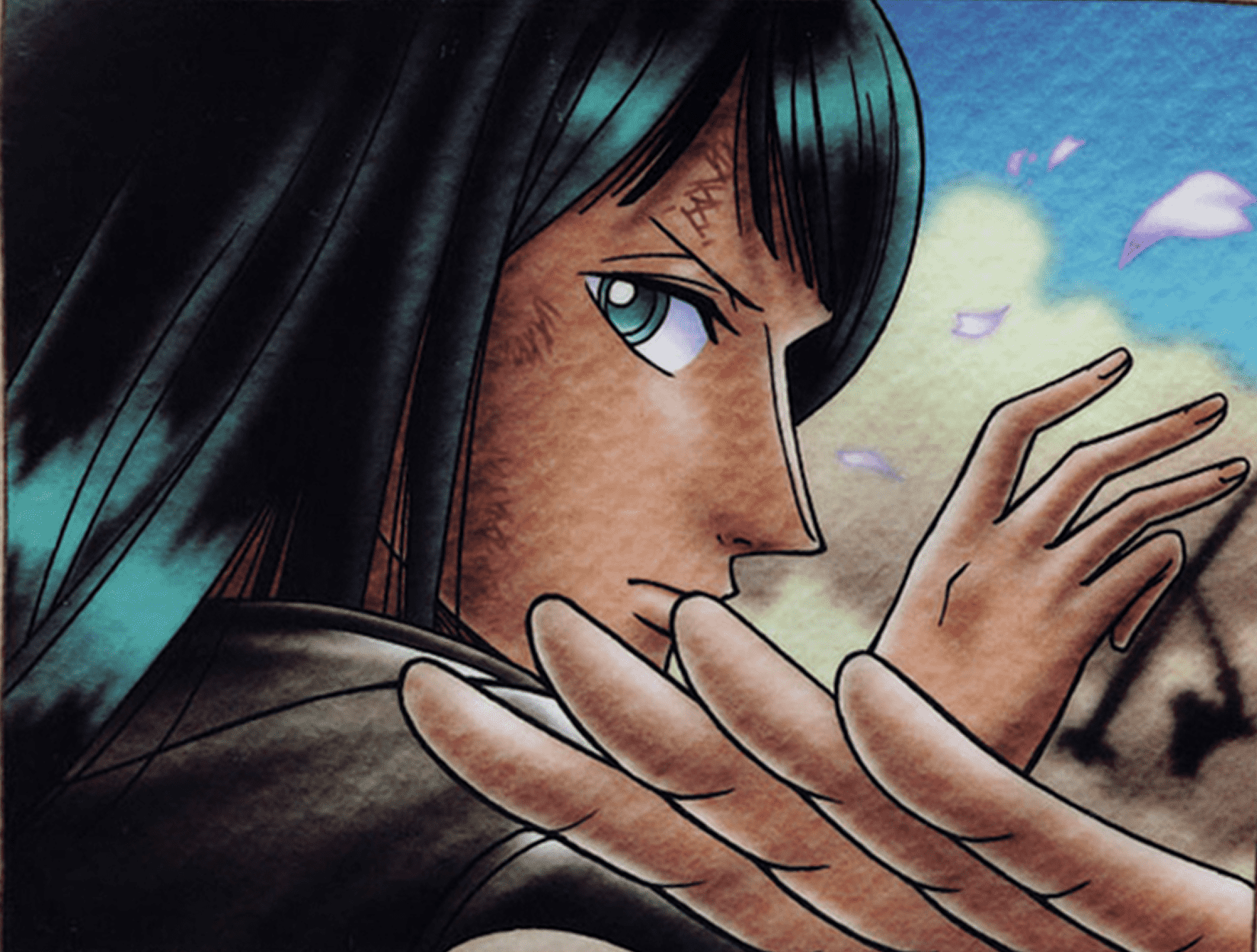
Robin’s Flower-Flower Fruit lets her sprout parts of her own body on other surfaces. The flower imagery describes how those body parts bloom; her power isn’t the same as growing ordinary plants.
Her official profile describes multiple arms, large limbs assembled from them, and the ability to bloom her whole body like a duplicate. Those are applications of the Hana Hana no Mi.
The useful distinction is between Robin’s body parts and Usopp’s ammunition. Both can seem to appear suddenly across a battlefield, but only Robin’s ability comes from her own Devil Fruit.
Brook: Yomi Yomi no Mi
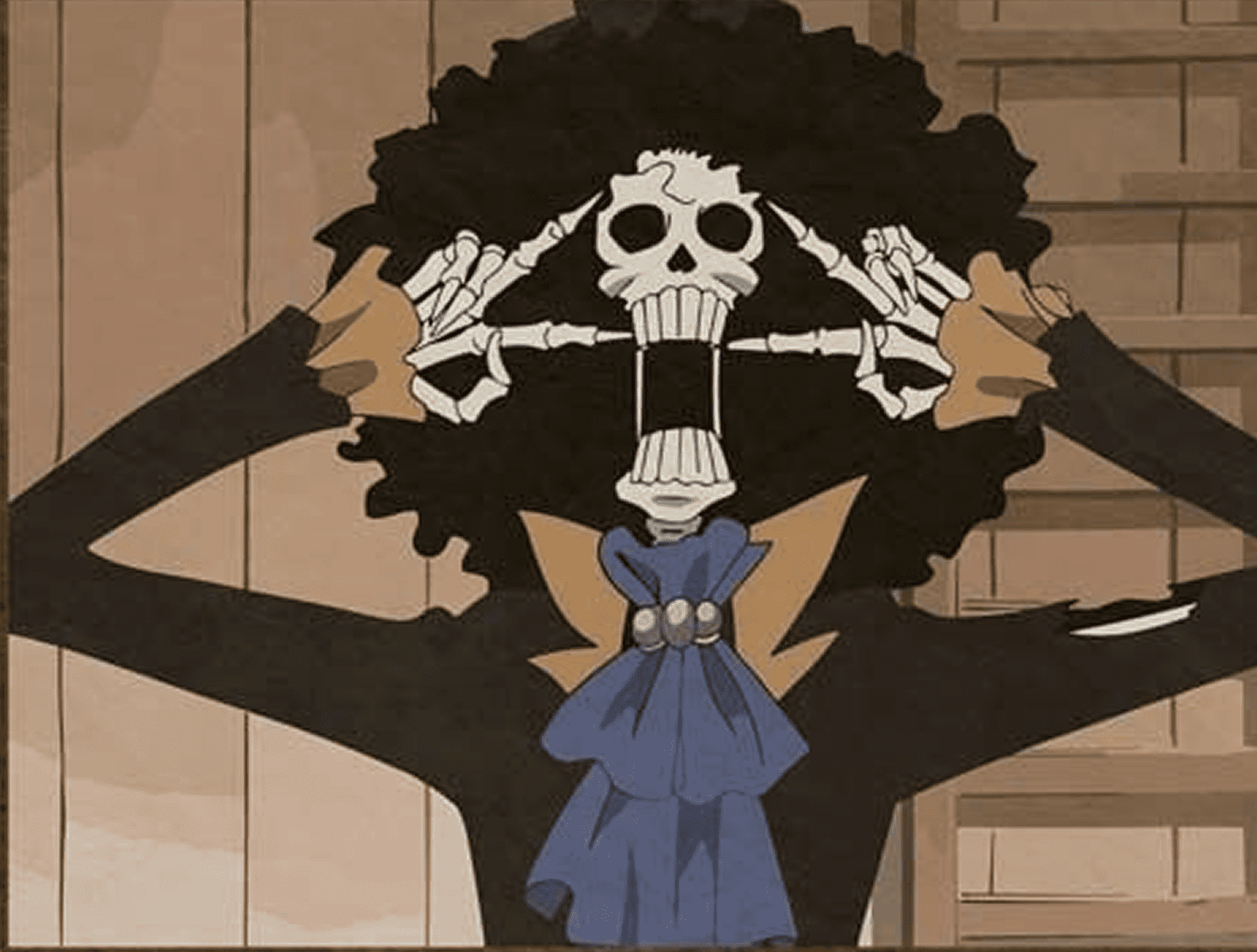
Brook ate the Revive-Revive Fruit before his death. It allowed him to return, but his body had become a skeleton by the time his soul found it.
His official profile also describes later soul-related techniques: moving around as a soul and bringing the chill of the underworld to his sword. Those abilities belong with his fruit-powered skill set.
A skeleton musician can make the fruit’s role easy to overlook. Brook belongs on the same four-person user list as Luffy, Chopper and Robin.
Why the other six aren’t fruit users
Zoro is a swordsman. His strength and unusual sword techniques don’t establish a Devil Fruit. The official Zoro profile identifies him through his swordsmanship and training.
Nami uses weather knowledge and the Clima-Tact. Her profile describes a weapon that creates small-scale weather effects and develops with her knowledge of weather science. Lightning in one of her attacks doesn’t make her a lightning-fruit user.
Usopp fires specialized ammunition, including Pop Greens. His profile explains that these are seeds of unusual plants from the Boin Archipelago. His plant attacks aren’t evidence that he ate a plant fruit.
Sanji fights with kicks. His profile describes both his martial arts and flaming legs without identifying a Devil Fruit. Fire on a fighter’s body is not enough to assign them one.
Franky is a cyborg. His profile attributes his missiles, beams and other weapons to modifications and technology. A mechanical weapon can resemble a supernatural attack without making its operator a fruit user.
Jinbe is a whale shark fish-man and a Fish-Man Karate expert, as his profile explains. His species and martial art account for abilities that shouldn’t be confused with a water-based Devil Fruit.
Do fruit users lose the ability to swim?
Yes. The official Devil Fruit explainer describes the weakness that comes with the power: immersion drains a user’s strength and can leave them unable to move. It also identifies collected water beyond the sea, including rivers, lakes and baths.
That is why the four-user count matters aboard a ship. Powerful abilities come with a serious problem if their user falls overboard.
The rule concerns immersion; it isn’t a reason to treat every splash or weather attack as automatically defeating a fruit user.
Wano spoilers: why does Luffy’s fruit have two names?
Stop here if you haven’t reached manga chapter 1044 or anime episode 1071.
The fruit known as the Gomu Gomu no Mi is revealed to be the Hito Hito no Mi, Model: Nika — the Human-Human Fruit, Model: Nika, a Mythical Zoan.
The official episode 1071 synopsis explicitly identifies the alternate name and Zoan classification. Crunchyroll’s Gear guide places Gear 5’s awakening debut at episode 1071 and chapter 1044.
These are names for the same fruit Luffy ate. He hasn’t eaten a second fruit. The reveal changes the explanation of that fruit; it doesn’t increase the Straw Hats’ user count from four to five.
Chopper’s fruit is also called Hito Hito no Mi, but Luffy’s full name includes Model: Nika. Keeping the complete model name avoids confusing the two.
Sources and scope
This guide uses the official ONE PIECE.com crew directory, the individual profiles linked above, its Devil Fruit explainer and its episode 1071 synopsis, researched October 28, 2026. Japanese fruit names are rendered in romanized form with familiar English names. The Wano episode/chapter pairing is also supported by Crunchyroll’s guide.
The table is limited to the ten-member crew through Wano. It doesn’t predict future fruits, add allies to the crew, or assign powers from fan theories.
More Straw Hat references
- Crew join order — when each member joins, with chapters and episodes.
- Straw Hat Haki users — a separate ability comparison; Wano baseline with a marked manga update through chapter 1195.
- Time-skip training — where the nine separated crew members developed their skills; spoilers through Fish-Man Island.
- Straw Hat ages — before-and-after ages and birthdays; roster and Brook backstory spoilers.
Discussion for this post
Letters, marginalia, and dispatches from fellow readers.
Likes, favorites, and comments are available for signed-in readers.
Comments
Be the first to drop a thought.