Luffy's Gears 1–5 & Haki Types Explained (One Piece)
Every one of Luffy's Gears 1–5 explained with notable battles, manga chapters, and anime episodes — plus his three Haki types and their advanced forms.
This post is in two parts: Gears (a repeating block for each of Luffy’s numbered Gears, plus “Gear 1” as his baseline style before Gear Second), then Haki (Luffy only, text for now—images and clips can come later).
Part one: Gears
GEAR ONE
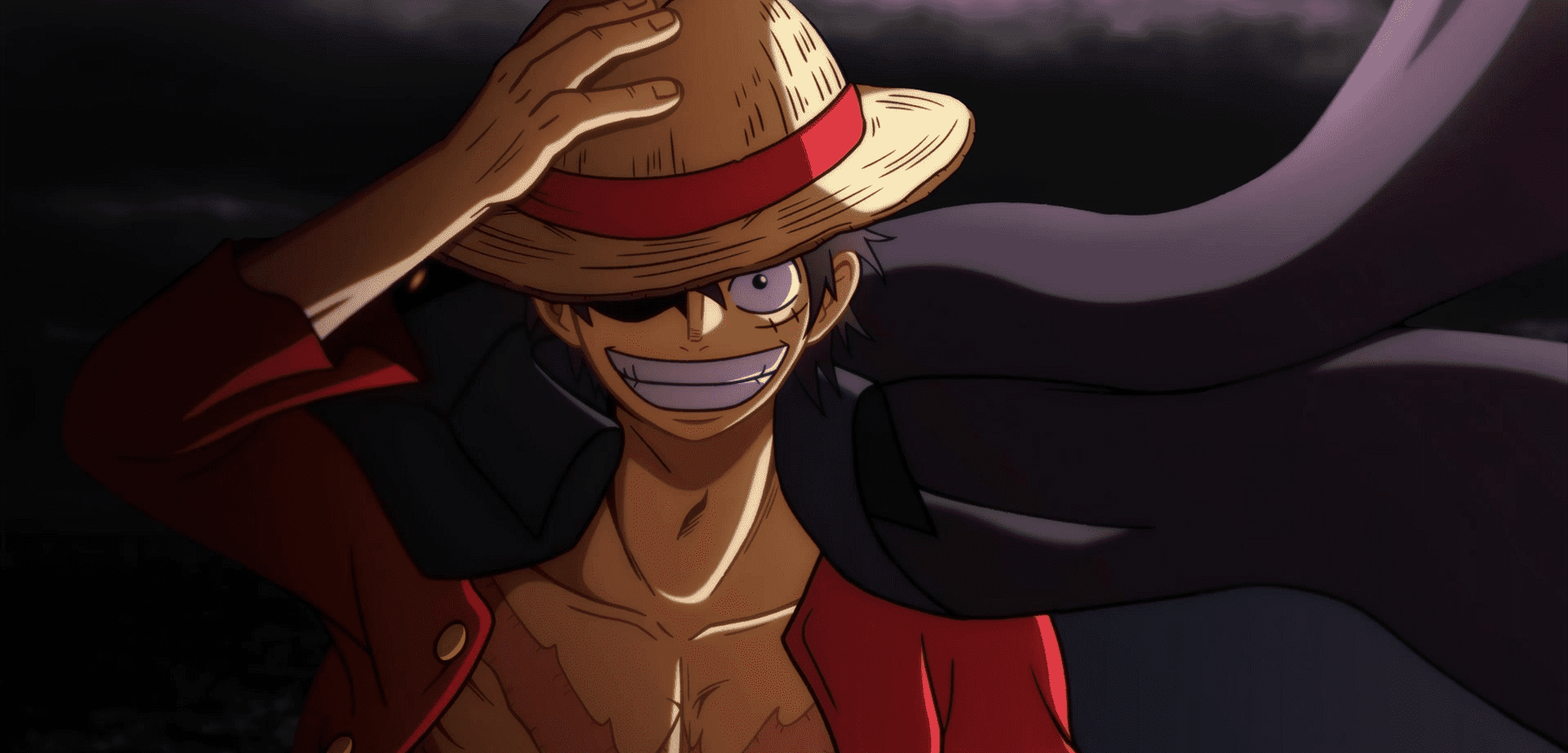
Gear one here means Luffy when he is not using a named Gear: the Gomu Gomu no Mi (Gum-Gum Fruit) as a Paramecia that makes his body rubber—immune to ordinary blunt hits, able to stretch limbs for range and creative attacks, and vulnerable to cutting and, classically, to seastone and the sea. It is the foundation every later Gear builds on; no extra strain like the post–Enies Lobby forms.
Notable battles
| Enemy | Anime episode | Manga chapter |
|---|---|---|
| Arlong | 43 | 93 |
| Crocodile (Alabasta, final round) | 124 | 203 |
| Enel (Skypiea) | 192 | 299 |
| Bellamy (Jaya) | 151 | 234 |
GEAR TWO
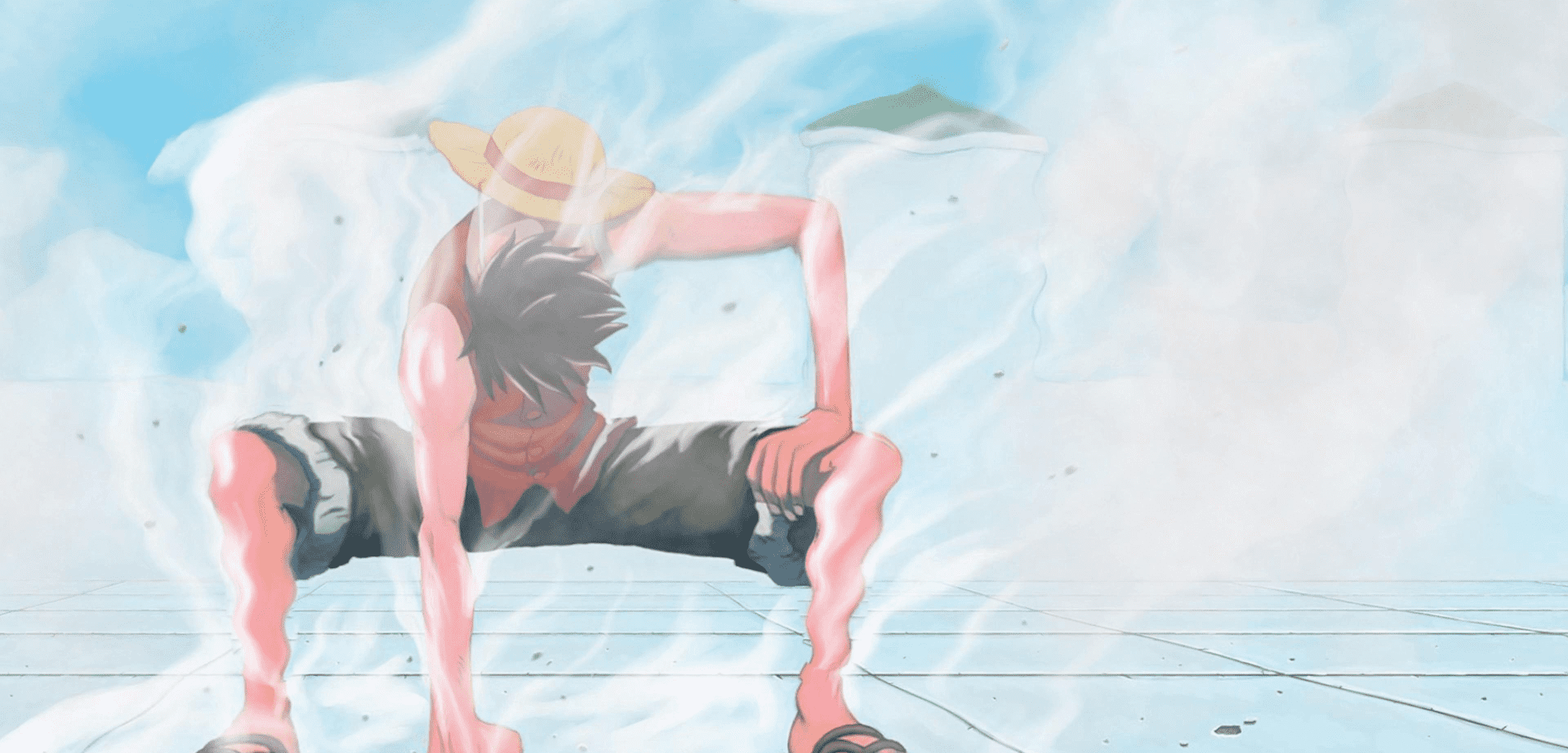
Gear Second speeds Luffy up by using his rubber circulatory system as a pump—accelerated blood flow means faster movement, faster attacks, and the telltale steam. It debuted against CP9 in Enies Lobby. The tradeoff is strain on his body; overuse early on had a real cost before he learned to manage it.
Notable battles
| Enemy | Anime episode | Manga chapter |
|---|---|---|
| Blueno (debut) | 272 | 387 |
| Rob Lucci (Enies Lobby) | 309 | 427 |
GEAR THREE
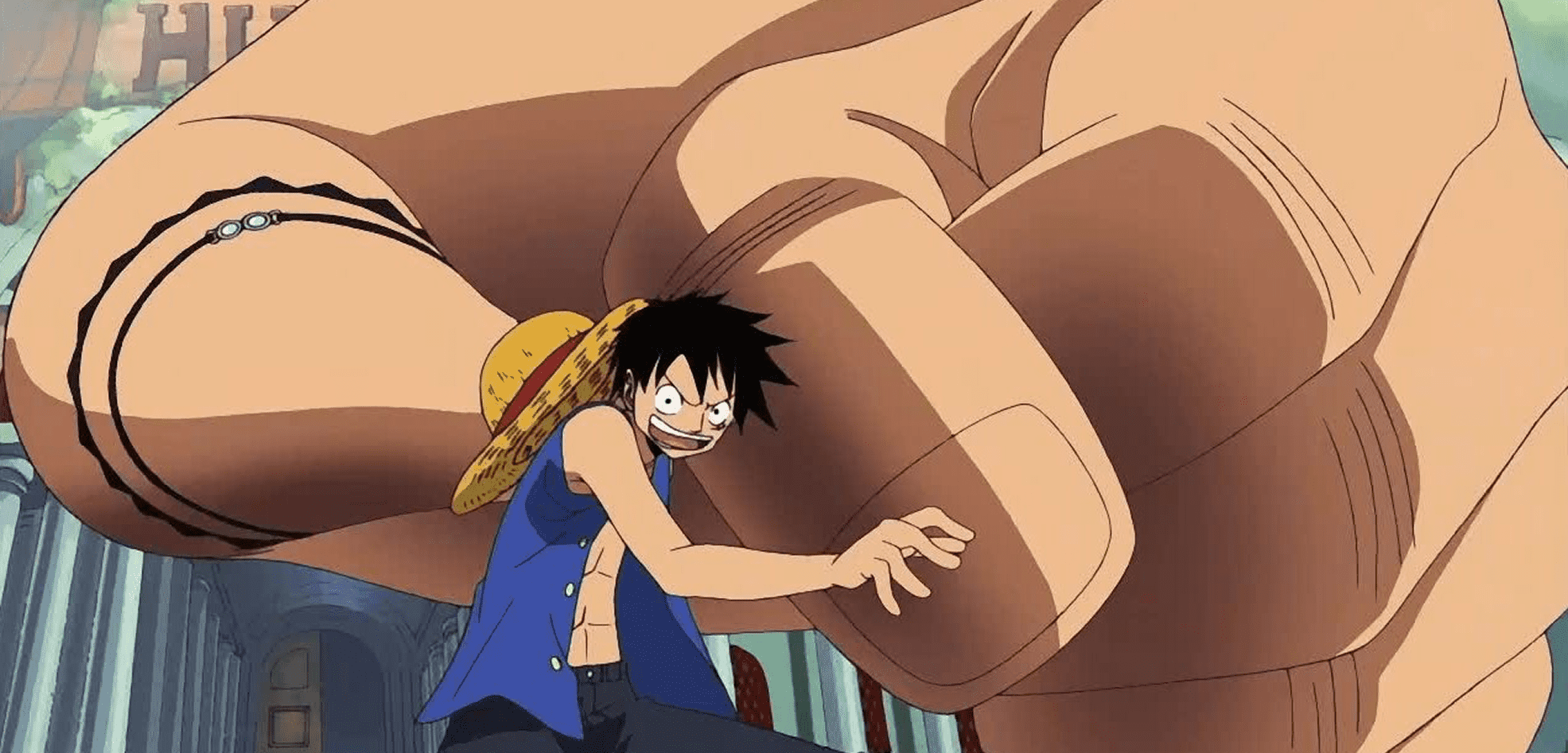
Gear Third inflates bones by blowing air into them, producing giant limbs and devastating impact—useful against large targets and tough defenses. Early on, shrinking to chibi form after use was a major drawback; post–timeskip that limitation is largely handled.
Notable battles
| Enemy | Anime episode | Manga chapter |
|---|---|---|
| Rob Lucci (debut) | 288 | 403 |
GEAR FOUR
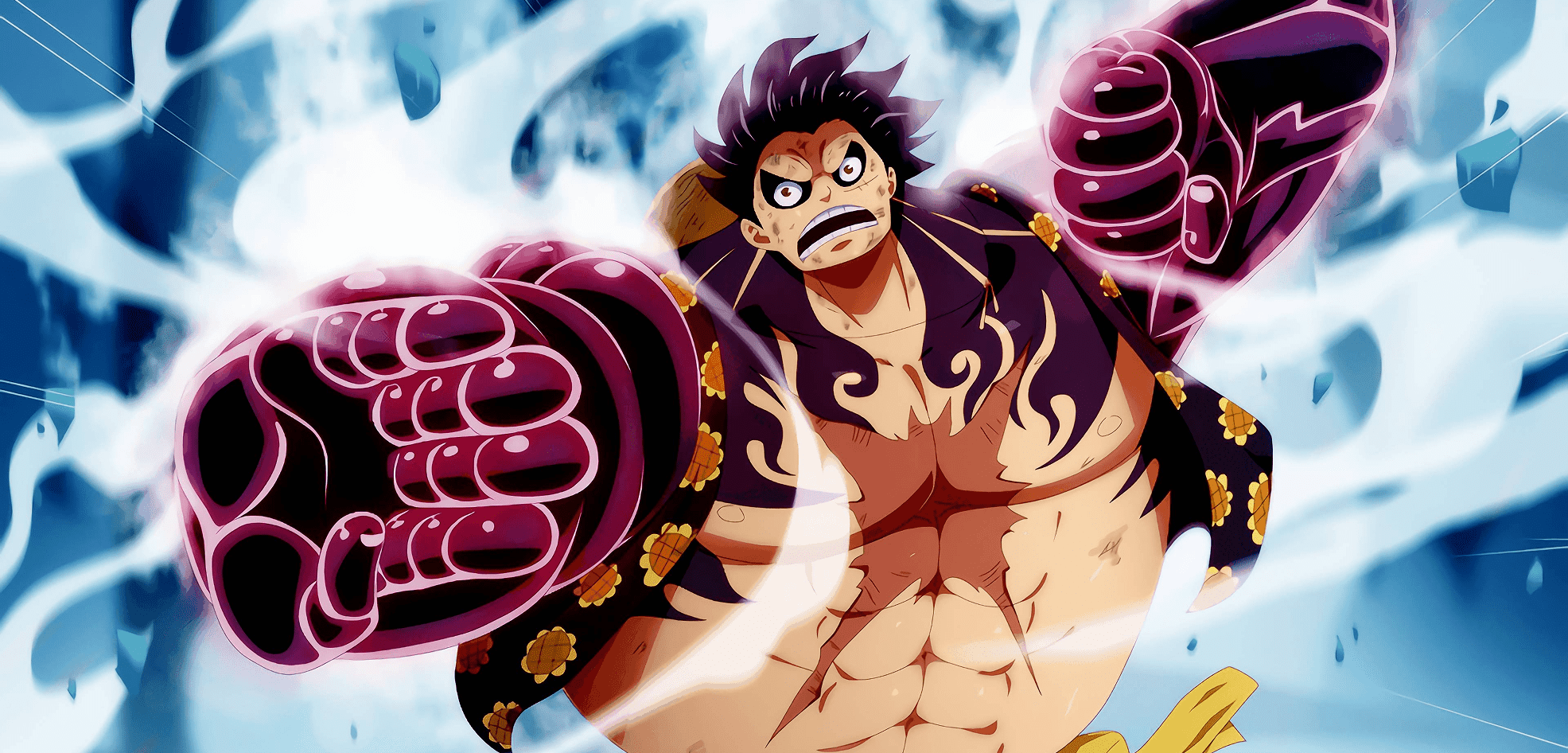
Gear Fourth coats Luffy in Armament Haki and uses compressed air inside his muscles for explosive movement and power. It has three main forms: Boundman (power and bounce, debut vs Doflamingo), Tankman (absorption and counter, vs Cracker), and Snakeman (speed and changing trajectory, vs Katakuri). Time limits and recoil after the form ends are the main costs.
Notable battles
| Enemy | Anime episode | Manga chapter |
|---|---|---|
| Donquixote Doflamingo (Boundman) | 726 | 784 |
| Charlotte Cracker (Tankman) | 798 | 835 |
| Charlotte Katakuri (Snakeman) | 869 | 895 |
GEAR FIVE
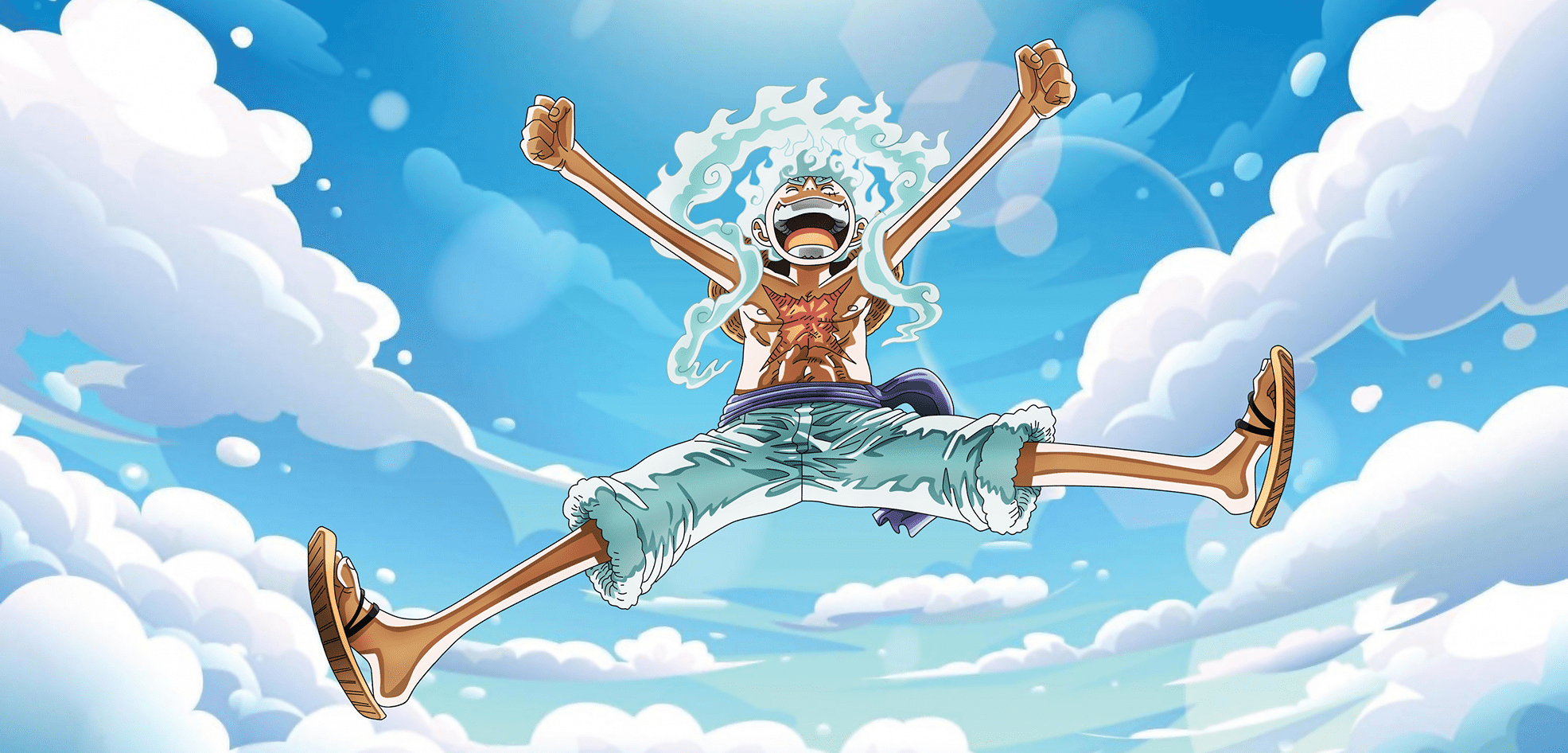
Gear Fifth is the awakening of Luffy’s fruit, revealed as the Hito Hito no Mi, Model: Nika—a transformation with incredible freedom of movement, creative “cartoon” logic, and a different physical presence than G2–G4. It is the form in which he could stand against Yonko-level opposition in Wano. The story treats it as a revelation of the fruit’s true nature, not a small step up from Gear Fourth.
Notable battles
| Enemy | Anime episode | Manga chapter |
|---|---|---|
| Kaido (debut) | 1071 | 1044 |
If you are anime-only and closing the gap to the manga, Gear Fifth’s first major animated stretch (Ep. 1071) is one of the most lavish sequences the TV run has put on Luffy—worth the wait even if you are tempted to read ahead for Egghead.
Part two: Haki (Luffy)
The names Kenbunshoku, Busoshoku, and Haoshoku are the standard post–Sabaody vocabulary; in Skypiea, Observation was “Mantra,” and Armament was not yet named on-page. Silvers Rayleigh gave Luffy the framework on Rusukaina over the two-year skip. What follows is Luffy only—how each type shows up in his fights and how far he takes it.
Observation Haki (Kenbunshoku)
Luffy uses Observation to sense presence, intent, and the strength of others, and to read movement in a fight. His big leap is Future Sight (mirai o miru / seeing the “slightly forward” future): it appears in the long fight with Charlotte Katakuri, where Katakuri’s own advanced Observation forces Luffy to match that level to land meaningful hits. Future Sight is not a free win—mental load, stamina, and opponents who are fast or tricky enough can still break the read. Luffy’s Observation is one half of how he survives Yonko-tier speed and precognition.
Armament Haki (Busoshoku)
Armament lets Luffy touch real bodies that would otherwise phase or resist—especially Logia—and harden his strikes and blocks with invisible (later visible black) coating. Post–skip, black Armament is routine for serious fights. In Wano, he learns Ryuo-style internal destruction: projecting Haki through a surface to damage from the inside, without needing to punch straight through the outer shell. That advanced Armament is what lets him hurt defenses that shrug off raw Gear Fourth blows.
Conqueror’s Haki (Haoshoku)
Conqueror’s is innate—Rayleigh’s line is on the order of one in several million. Luffy’s first major unconscious burst is at Sabaody when Charloss is threatened. Later, Haoshoku coating (“clad” Conqueror’s) lets him infuse attacks with Conqueror’s so they clash with other top-tier CoC users and damage Yonko-level durability without relying on Armament alone. The distinction matters in Onigashima: meaningful exchanges with Kaido and Big Mom are framed around both advanced Armament and clad Conqueror’s, not raw Gear scaling alone.
Together, Gear Fifth’s flexibility plus clad Haki is the current ceiling for how Luffy is written against the strongest opponents in the world.
Want to read the manga where Gear Fifth lands first? One Piece Manga Box Set 4 covers the Wano arc — where the Gear Fifth reveal actually happens on the page.
More One Piece references
- Complete One Piece Guide — start-here hub with watch order, manga, and lore guides
- Watch Order — every anime arc, film, and special in canon order
- Filler Episodes Skip Guide — every filler arc and what is worth watching
- Manga Reading Guide — where to start and which edition to buy
- Manga Box Sets — every official Viz box set compared
- Story Arcs — manga ↔ anime mapping
- Straw Hat Crew — when each member joined
- Luffy’s Family — three generations of trouble
- Bounty Board — bounties across seven update points
- Devil Fruit Quiz — which fruit would you unlock?
Discussion for this post
Letters, marginalia, and dispatches from fellow readers.
Likes, favorites, and comments are available for signed-in readers.
Comments
Be the first to drop a thought.