Chicken Ramen — 30-Minute Shoyu-Miso, Real Bowl, No Packet
Bone-in chicken thighs build the broth while you prep toppings — shoyu tare, finishing miso, ramen egg. Restaurant flavor in weeknight time.
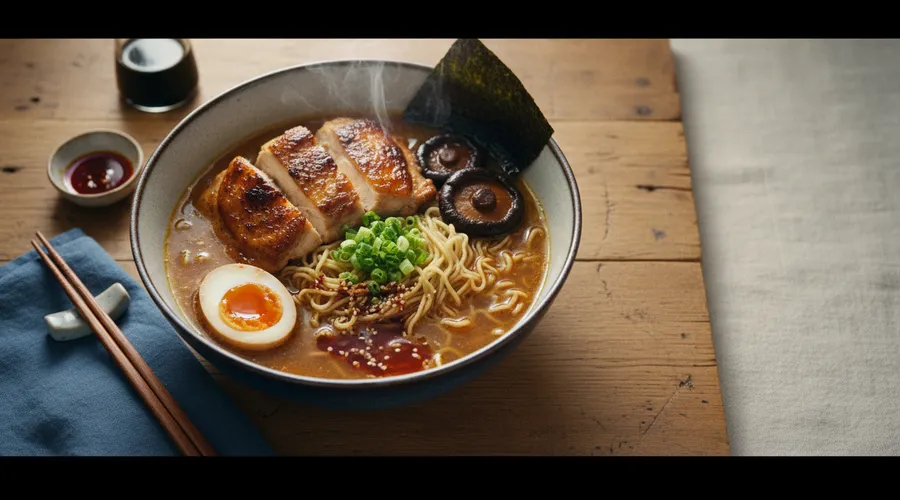
Recipe № 002 · Shoyu-Miso Ramen
Filed · Daily Upkeep kitchen
A 30-minute chicken ramen that doesn't taste like instant noodles with extra steps — bone-in thighs build the broth in the same pot.
Three pots running in parallel, one trick that separates this from a packet (the finishing miso goes in off-heat — boiling it kills the flavor). Notes on the technique live below; the recipe is right here.
- Yield 4 bowls
- Prep 0:10 mise en place
- Cook 0:20 parallel pots
- Total 0:30 start to bowl
- Equipment 3 pots 4 qt + 2 saucepans
Ingredients
-
Chicken & broth bone-in is the move
- 4 Bone-in, skin-on chicken thighs About 2 lb total. Skin and bone do the heavy lifting in the broth — see notes.
- 6 cups Low-sodium chicken stock Or 5 cups stock + 1 cup water. Low-sodium so the tare drives the salt.
- 2 tbsp Neutral oil Vegetable, canola, or grapeseed.
-
Aromatics
- 2-inch Fresh ginger Sliced into coins. No need to peel.
- 4 Garlic cloves Smashed with the side of a knife.
- 6 Scallions Split: whites go in the broth, greens reserved for serving.
- 2 tbsp Toasted sesame oil For blooming aromatics. Not for sear.
-
Tare the flavor concentrate
- ¼ cup Soy sauce Japanese (Kikkoman) or any naturally brewed soy. Not "light soy" Chinese-style.
- 3 tbsp Mirin Sweet rice wine. Look for "hon-mirin" if you can find it.
- 2 tbsp Sake Or dry sherry as a swap.
- 1 tbsp Brown sugar Balances the salt.
-
Umami builders
- 4 Dried shiitake caps Worth seeking out. They rehydrate in the broth.
- 4-inch Kombu (dried kelp) Optional. Adds clean sea umami. Pull it before it boils.
- 2–3 tbsp White miso paste (shiro miso) Goes in off-heat at the end. Critical.
-
Noodles & egg
- 4 portions Fresh or dried ramen noodles Fresh is better. Sun Noodle is the gold standard. Dried works in a pinch — Sapporo Ichiban brick noodles, packet discarded.
- 4 Large eggs Straight from the fridge. Cold-start method.
-
Toppings pick the ones you like
- — Scallion greens, sliced thin Reserved from earlier.
- 4 sheets Nori (toasted seaweed) Cut into rectangles. One per bowl.
- 1 tbsp Toasted sesame seeds
- to taste Chili oil or rayu Sesame chili oil. A teaspoon per bowl is plenty.
Method
-
Mise en place & start the eggs
T+0:00Put the eggs in a small saucepan, cover with cold water by an inch, and set over high heat — cold start, no need to wait for a boil. Meanwhile, slice the ginger, smash the garlic, split the scallions (whites in 2-inch pieces, greens sliced thin and reserved). Mix the tare ingredients in a small bowl. Fill a separate large pot with water for the noodles and set it on a back burner over high heat.
-
Sear the chicken
T+0:02Pat the thighs dry and season lightly with salt. Heat the neutral oil in a 4-qt Dutch oven over medium-high until it shimmers. Lay the thighs in skin-side down and don't move them. Sear undisturbed for 6 minutes — the skin should release on its own and be deeply golden. Flip and sear 1 more minute. Transfer to a plate.
-
Pull the eggs
T+0:08When the egg water has just reached a rolling boil (around the 8-minute mark from a cold start, depending on your stove), set a timer for 5 minutes more. Pull at the buzz, dunk into ice water for 2 minutes, then peel under the water. Soft yolks. Set aside.
-
Bloom the aromatics
T+0:09Pour off all but about 1 tbsp of fat from the Dutch oven. Reduce heat to medium and add the sesame oil, ginger, garlic, and scallion whites. Cook, stirring, for 90 seconds — until very fragrant but not browned. Burnt garlic is bitter and unrecoverable.
-
Build the broth
T+0:11Pour the tare into the pot and let it sizzle for 30 seconds — this caramelizes the soy and sugar slightly. Add the chicken stock, dried shiitake, and kombu (if using). Return the seared thighs and any juices from the plate. Bring to a bare simmer.
-
Simmer — chicken cooks the broth
15 min passiveCover, lower heat to maintain a gentle simmer (small bubbles, not a roiling boil), and walk away for 15 minutes. This is the trick — the chicken cooks through while its fat, collagen, and bone richen the store-bought stock. If you used kombu, fish it out after 8 minutes so it doesn't turn the broth slimy.
-
Cook the noodles
T+0:26The noodle water should be at a rolling boil by now. Add the noodles and cook per package directions minus 1 minute — they'll keep cooking in the hot broth. Drain quickly and divide into four wide bowls.
-
Pull the chicken, slice
T+0:27Pull the thighs from the broth onto a cutting board. Slip the bone out (it should come away easily) and slice the meat against the grain into ½-inch strips, keeping the crispy skin on top. Pluck out the ginger, garlic, scallion whites, and shiitake (slice the shiitake — they're a topping).
-
Finish the broth — miso off-heat
T+0:29Turn off the burner. Put the miso paste in a small fine-mesh strainer and lower it into the broth, then whisk through with a fork or chopsticks until dissolved. This is the move that makes this taste like real ramen — see the note below.
-
Build the bowls, eat immediately
T+0:30Ladle the hot broth over the noodles — about 1½ cups per bowl. Arrange chicken slices, a halved soft-boiled egg, sliced shiitake, scallion greens, and a sheet of nori on top. Drizzle chili oil, sprinkle sesame. Serve right now — ramen waits for no one.
Notes & swaps
Why bone-in, skin-on thighs
Most 30-minute ramen recipes use boneless breasts or pre-cooked rotisserie chicken. They work, but they leave the broth doing all the heavy lifting on its own. Bone-in skin-on thighs in the broth means the rendered fat, skin collagen, and bone marrow infuse the store-bought stock during the 15 minutes the chicken is cooking anyway. It's two jobs for one piece of meat.
Don't skip the sear. The browned skin is where most of the flavor lives.
What "tare" actually means
In a real ramen-ya, the broth is unsalted — the salt and flavor concentrate (the tare) goes into the bottom of the bowl, and broth is ladled over it. Each style of ramen — shoyu, shio, miso — is defined by its tare.
This recipe uses a shoyu (soy-based) tare with a miso finish. You can scale the tare to taste: more soy = saltier, more mirin = sweeter, more sake = more aromatic. Once you've made it twice, you'll start adjusting by eye.
The miso-off-heat rule
Boil miso and it turns bitter, loses its aroma, and develops a sour-grain edge. Add it after the burner's off and whisk it in through a strainer — the strainer catches the fibrous bits. This is a universal Japanese cooking rule: miso soup is always finished off-heat. Same logic applies here.
Fresh vs. dried noodles
Fresh ramen noodles — Sun Noodle is the best widely available brand in the US — have the alkaline springiness that defines real ramen. Look for them in the refrigerated section of an Asian grocery, or in the produce section at well-stocked supermarkets.
If you can only find dried, use a brick of Sapporo Ichiban or similar — discard the seasoning packet, cook the noodles in plain water. Avoid actual instant noodles like Top Ramen — they're fried and won't hold up to a real broth.
Ramen egg — quick version
This recipe uses a plain soft-boiled egg. For a true ajitsuke tamago (seasoned ramen egg), marinate the peeled eggs in 3 tbsp soy + 3 tbsp mirin + 3 tbsp water in a zip bag for at least 30 minutes — overnight is better. Marinate while the broth simmers if you want to plan ahead by half a day.
Make it spicy
Two ways:
- In the broth: add 1 tsp doubanjiang (Sichuan spicy fermented bean paste) when you bloom the aromatics. Builds in deeper heat with funk.
- On top: a generous drizzle of chili oil or rayu at the bowl. Cleaner heat, controllable per eater.
Vegetarian swap
Replace chicken stock with kombu-shiitake dashi: 6 cups water + a 6-inch piece of kombu + 8 dried shiitake, steeped 20 minutes, then brought to a bare simmer for 5 minutes more. Skip the chicken; top with crispy tofu, blanched bok choy, and corn. Bump the miso to 4 tbsp to make up for the lost richness.
Make-ahead & storage
- Broth: Keeps 3 days in the fridge. Reheat gently. Add fresh miso to each bowl after warming — never reheat broth with miso already in it.
- Chicken: Slice and store separately. 3 days.
- Eggs: Best the day of. If marinating as ajitsuke tamago, 3 days in the marinade.
- Noodles: Cook fresh each time. Pre-cooked noodles turn to glue.
Discussion for this post
Letters, marginalia, and dispatches from fellow readers.
Likes, favorites, and comments are available for signed-in readers.
Comments
Be the first to drop a thought.