Butterbeer Cookies — Harry Potter, Chewy, Frosted, Caramel-Drizzled
Soft butterbeer cookies inspired by the wizarding world — chewy butterscotch dough, butterscotch buttercream, and a butterbeer caramel drizzle. Three components, one cookie.
Recipe № 003 · Frosted Drop Cookies
Filed · Daily Upkeep kitchen
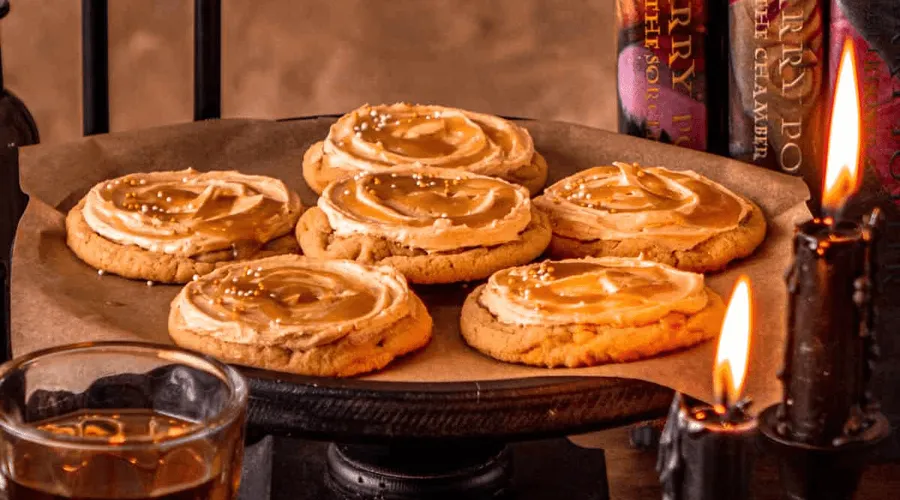
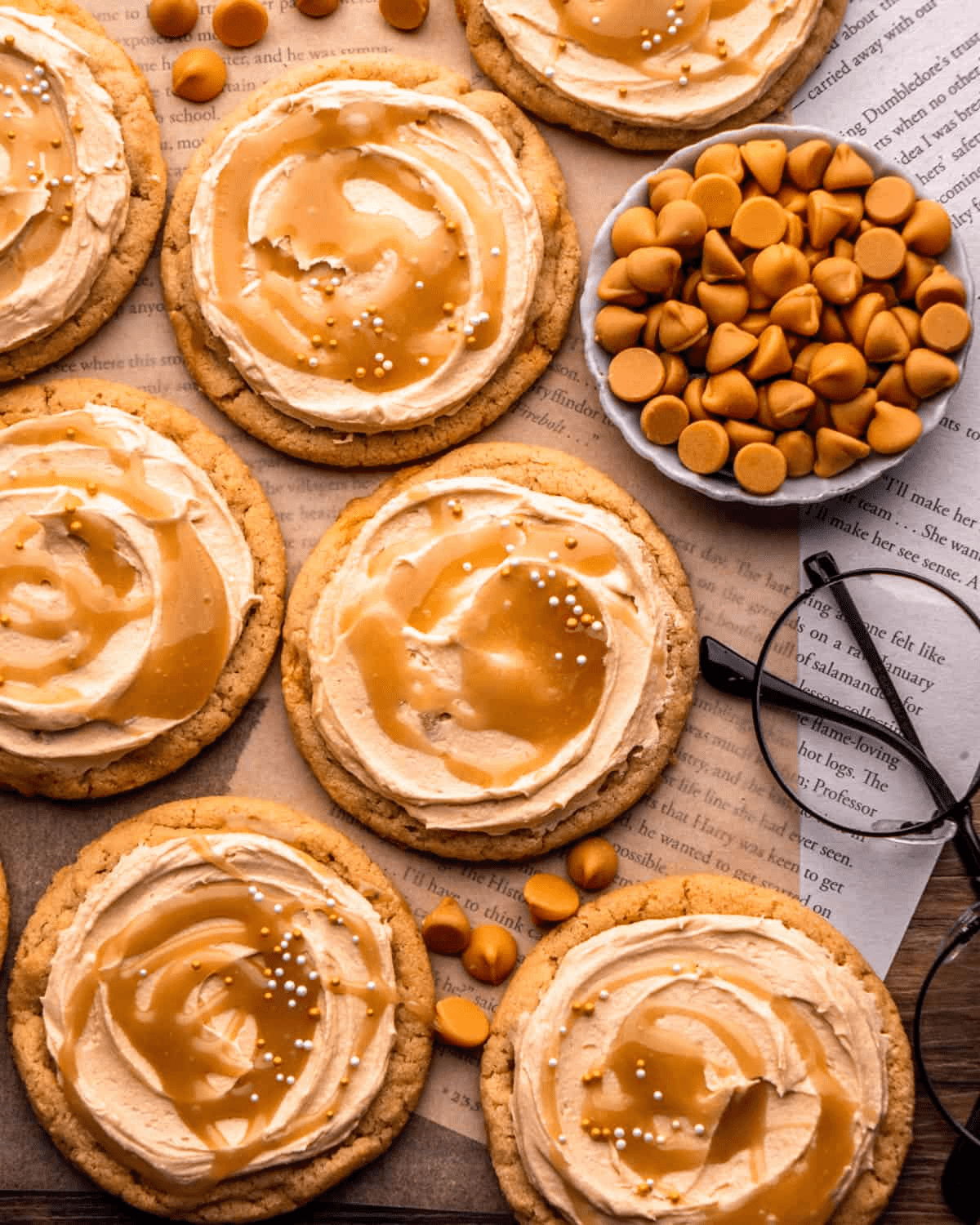
A butterbeer cookie with all three layers — chewy butterscotch dough, butterscotch buttercream, and a slow-reduced butterbeer caramel drizzle.
Three components share the timeline: cookies bake and cool while you make the buttercream and reduce the caramel. Source credit at the bottom — this is adapted from In Bloom Bakery's recipe.
- Yield 19 cookies
- Active 1:00 mix · frost · drizzle
- Cool 0:30 cookies on rack
- Total 1:30 start to plate
- Oven 350°F lower-middle rack
Ingredients
-
Cookie — dry spooned & leveled flour
- 2 cups All-purpose flour 250 g. Spooned and leveled — don't scoop or you'll pack 20% more flour.
- ½ tsp Baking soda
- ½ tsp Baking powder
- ½ tsp Kosher salt
-
Cookie — wet
- ¾ cup Unsalted butter, softened 168 g. Out of the fridge 30 min ahead — soft enough to dent with a finger, not greasy.
- ¾ cup Light brown sugar, packed 165 g. Mostly brown sugar = chewier cookies.
- ¼ cup Granulated white sugar 50 g.
- 2 Egg yolks, room temperature Yolks only — the extra fat is what makes these chewy.
- 1 tbsp Vanilla bean paste or extract Bean paste is worth it here if you have it.
- 1½ tsp Butter extract McCormick or LorAnn. The "butter" in butterbeer.
-
Cookie — butterscotch
- ¼ cup Butterscotch chips, melted 50 g. Melted into the dough — gives every bite butterscotch flavor.
- ½ cup Butterscotch chips, whole 100 g. Folded in at the end for melty pockets.
-
Butterscotch buttercream
- ½ cup Unsalted butter, softened 112 g.
- ⅛ tsp Kosher salt
- ½ cup Butterscotch chips, melted & cooled 100 g. Slightly cooled so they don't melt the butter.
- 1 cup Powdered sugar, sifted 130 g.
- ¼ tsp Butter extract
- ½ tsp Vanilla bean paste or extract
-
Butterbeer caramel slow-reduced soda
- 12 oz Flying Cauldron butterscotch beer 355 ml. Cream soda works as a swap — see notes.
- 3 tbsp Unsalted butter, softened 42 g.
- 3 tbsp Heavy cream, room temperature 45 ml. Room temp so it doesn't seize the caramel.
- pinch Kosher salt
-
Finishing optional
- — White & gold nonpareil sprinkles Make them look magical. Skip if you want.
Method
-
Pre-heat & line the sheets
T+0:00Heat the oven to 350°F, rack in the lower-middle position. Line two baking sheets with parchment paper. Melt the ¼ cup of butterscotch chips for the dough in a small bowl (microwave 30 sec, stir, 15 sec, stir) and set aside to cool slightly.
-
Whisk the dry ingredients
T+0:03In a medium bowl, whisk the flour, baking soda, baking powder, and salt. Set aside.
-
Cream the butter & sugars
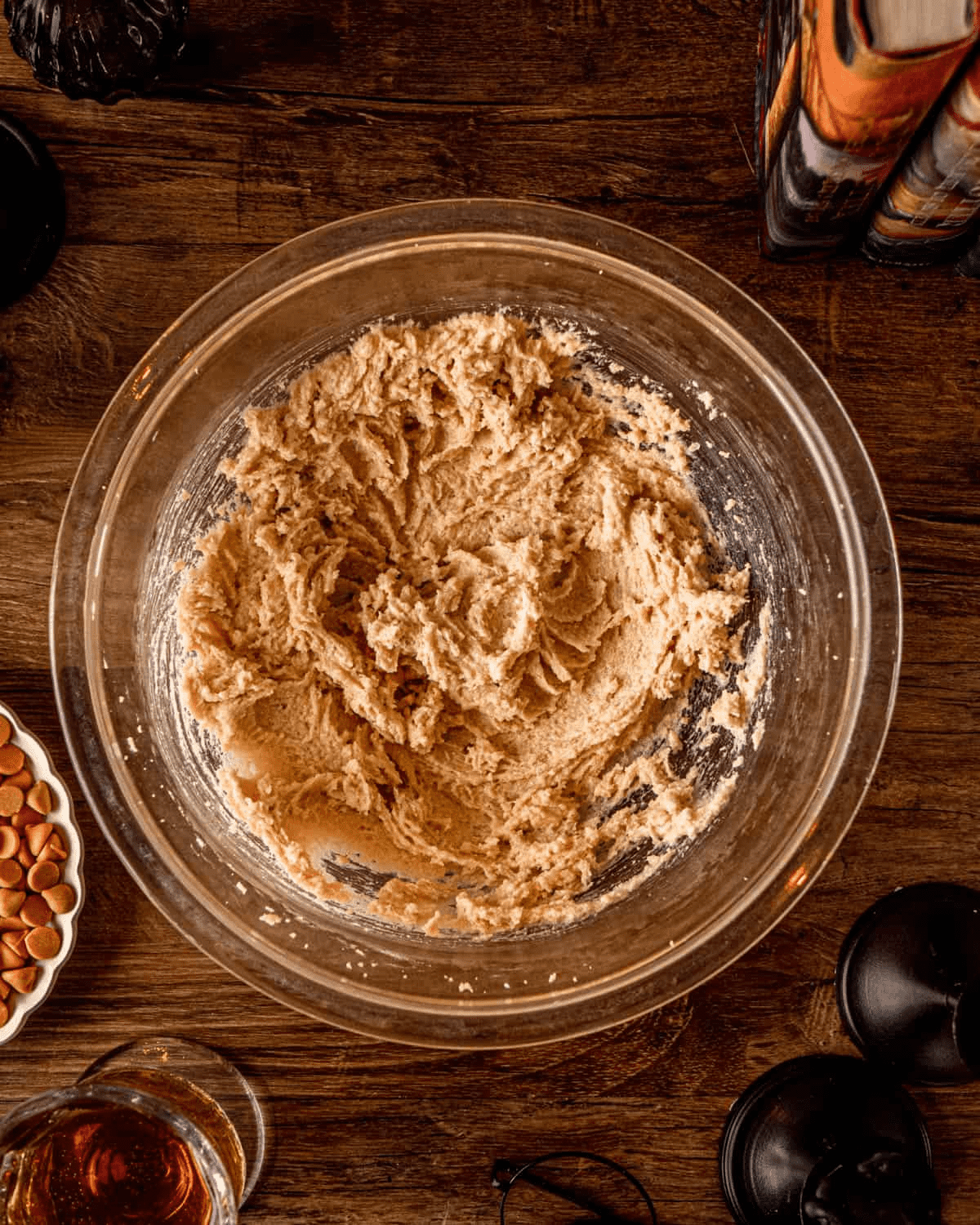
T+0:05In a large bowl (or stand mixer with paddle), beat the softened butter, brown sugar, and white sugar on high speed until light and fluffy — 2 to 3 minutes. The mixture should pale visibly. Scrape the bowl once.
-
Add yolks, extracts, melted chips
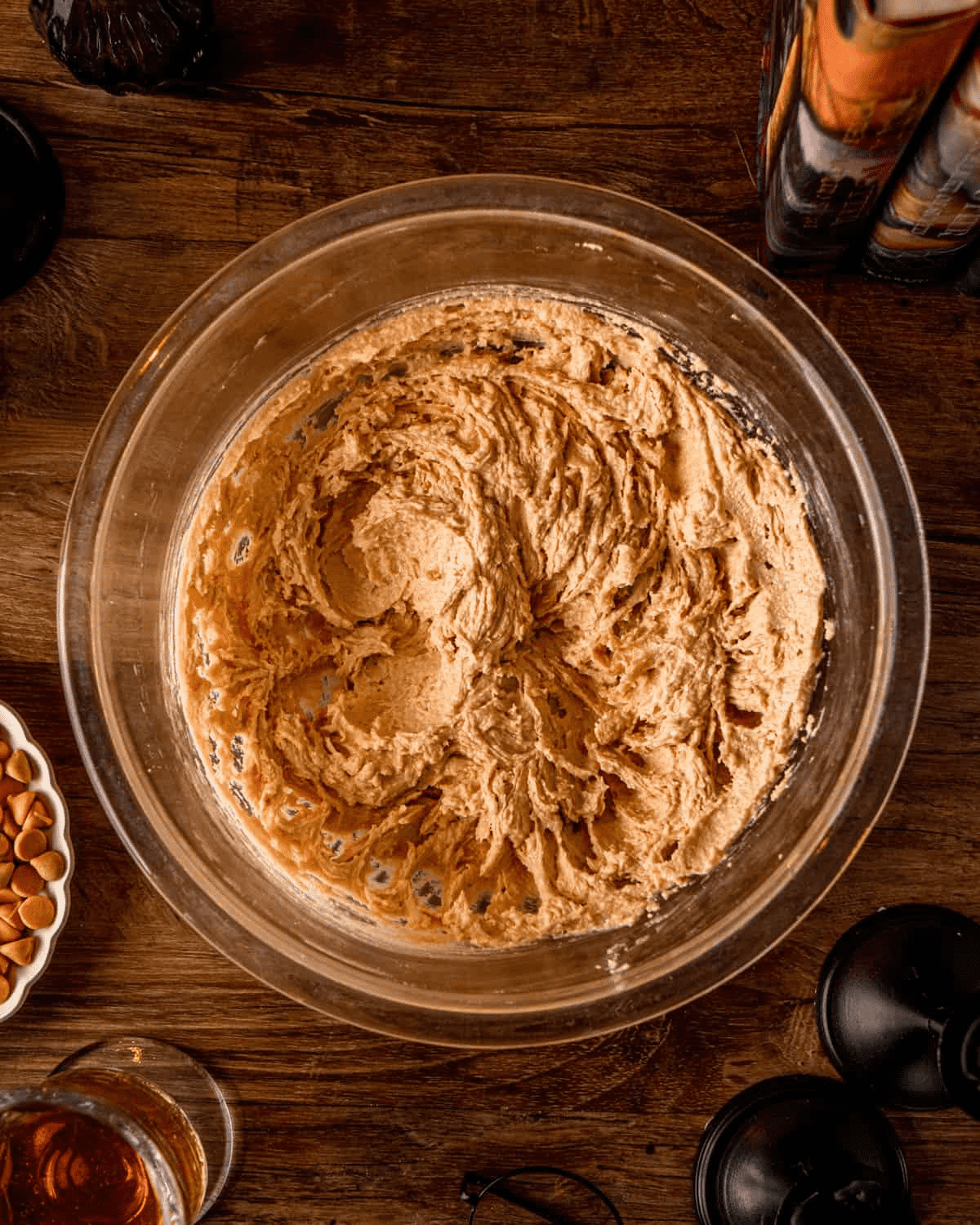
T+0:09Add the egg yolks, vanilla bean paste, butter extract, and the slightly-cooled melted butterscotch chips. Beat on medium speed until pale and fluffy, 1–2 minutes. Scrape the sides as needed.
-
Combine wet & dry, fold in chips
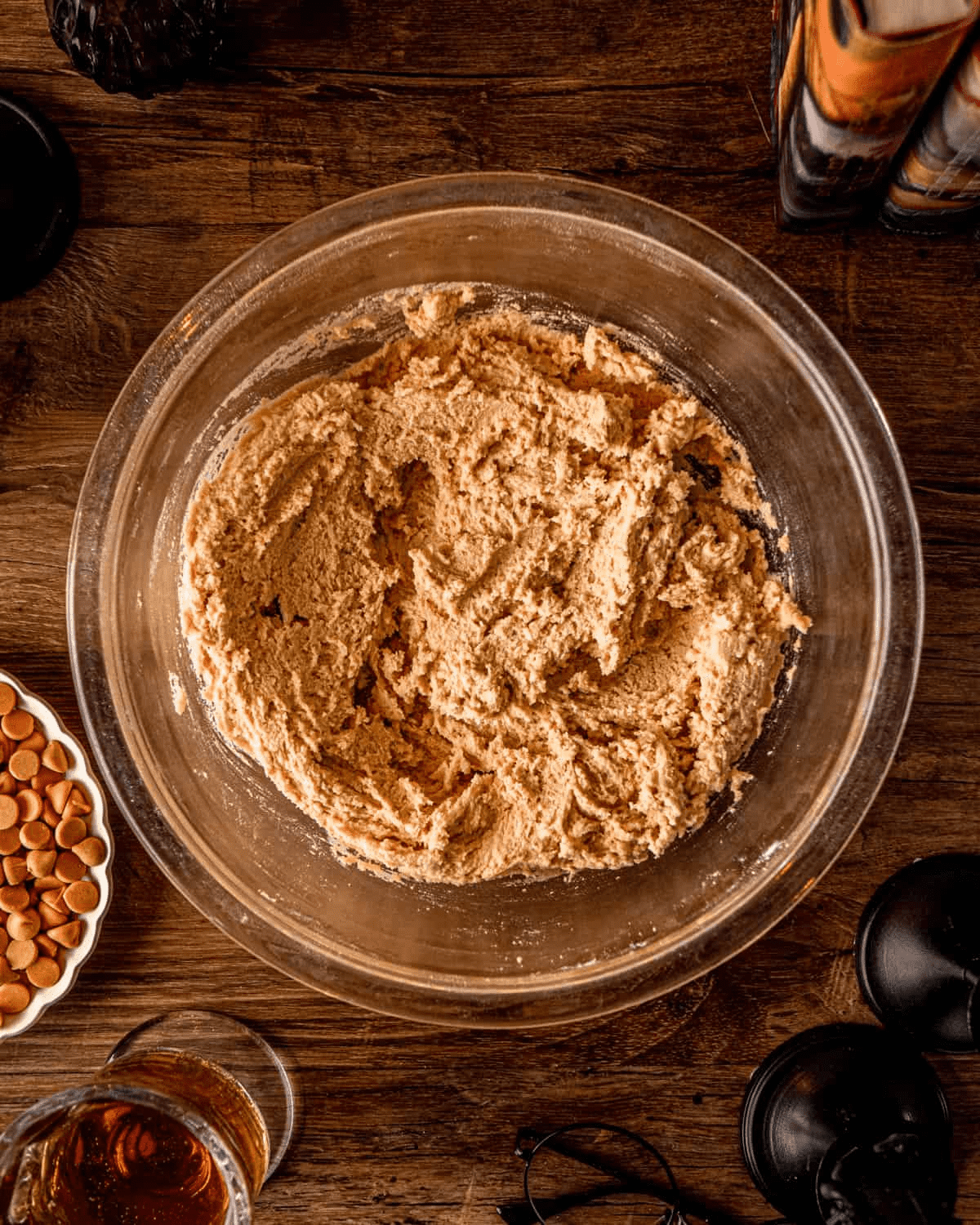
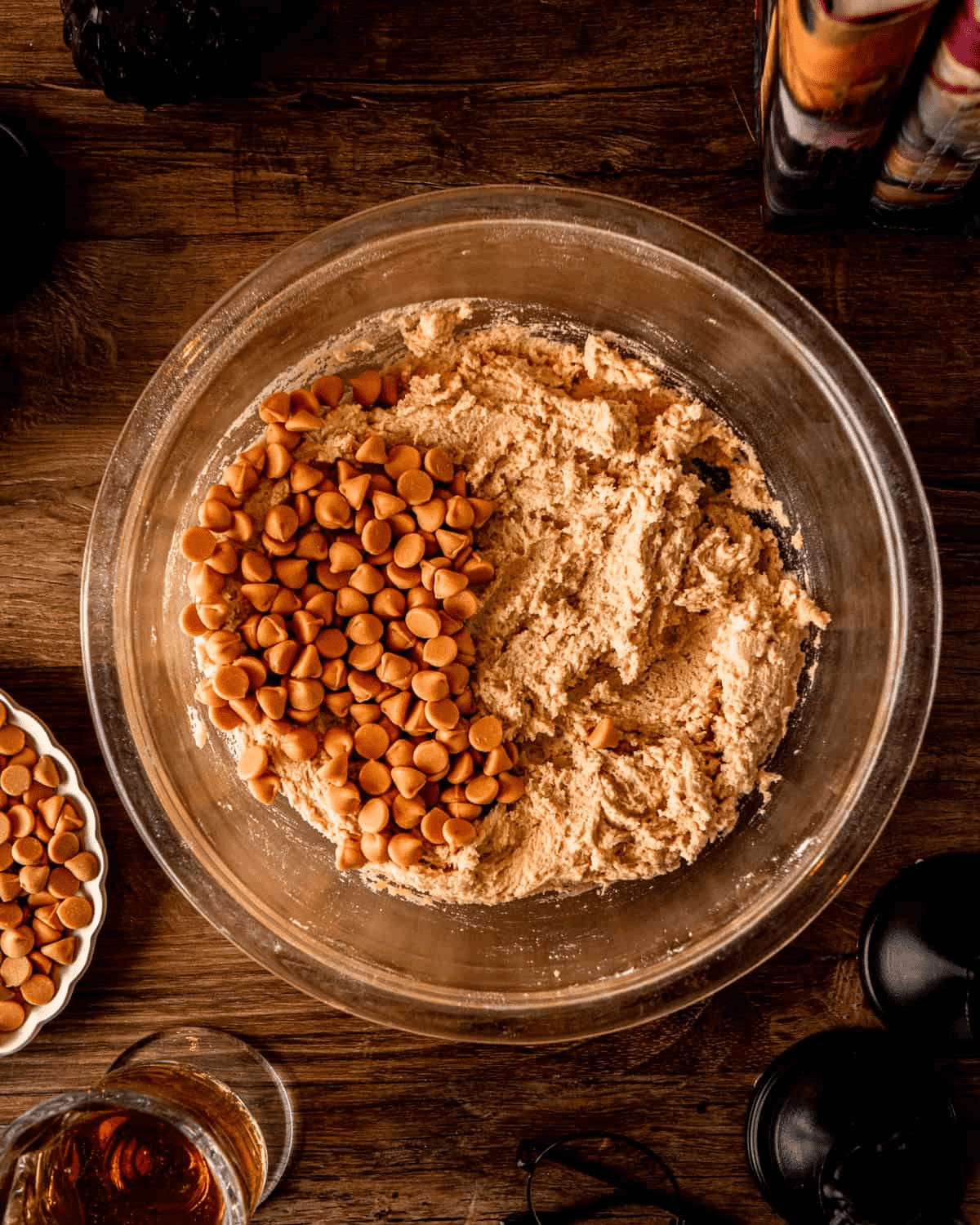
T+0:11Add the dry ingredients to the wet on low speed, mixing just until combined — overmixing develops gluten and the cookies turn cakey. Fold in the ½ cup of whole butterscotch chips with a rubber spatula by hand.
-
Scoop & bake
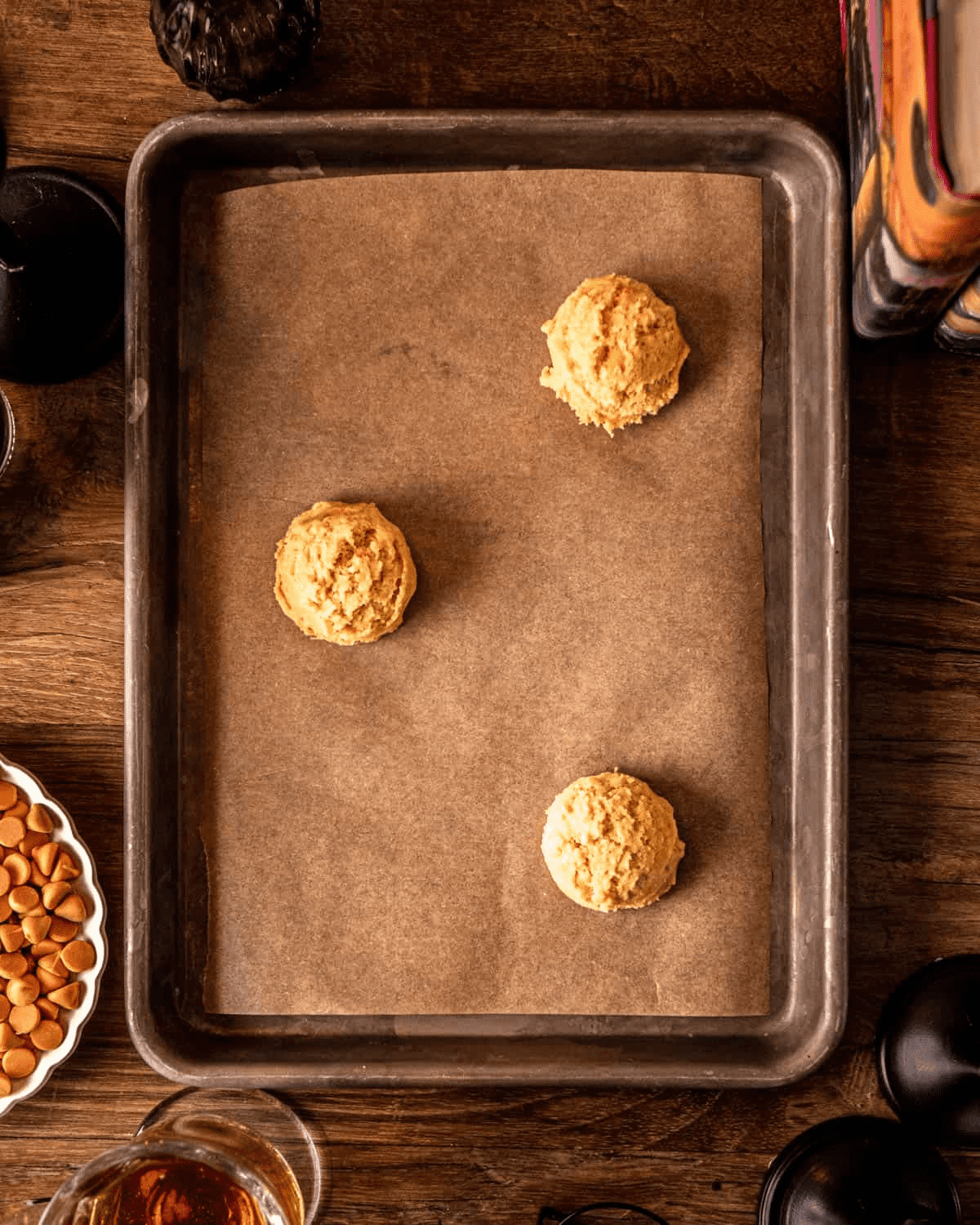
T+0:14Using a 2-tablespoon cookie scoop, portion the dough onto the prepared sheets, 2 inches apart (8–9 per sheet). Bake one sheet at a time for 10–11 minutes — edges set, centers still soft and slightly underdone. They'll firm up as they cool. About 19 cookies total.
-
Cool on sheet, then rack
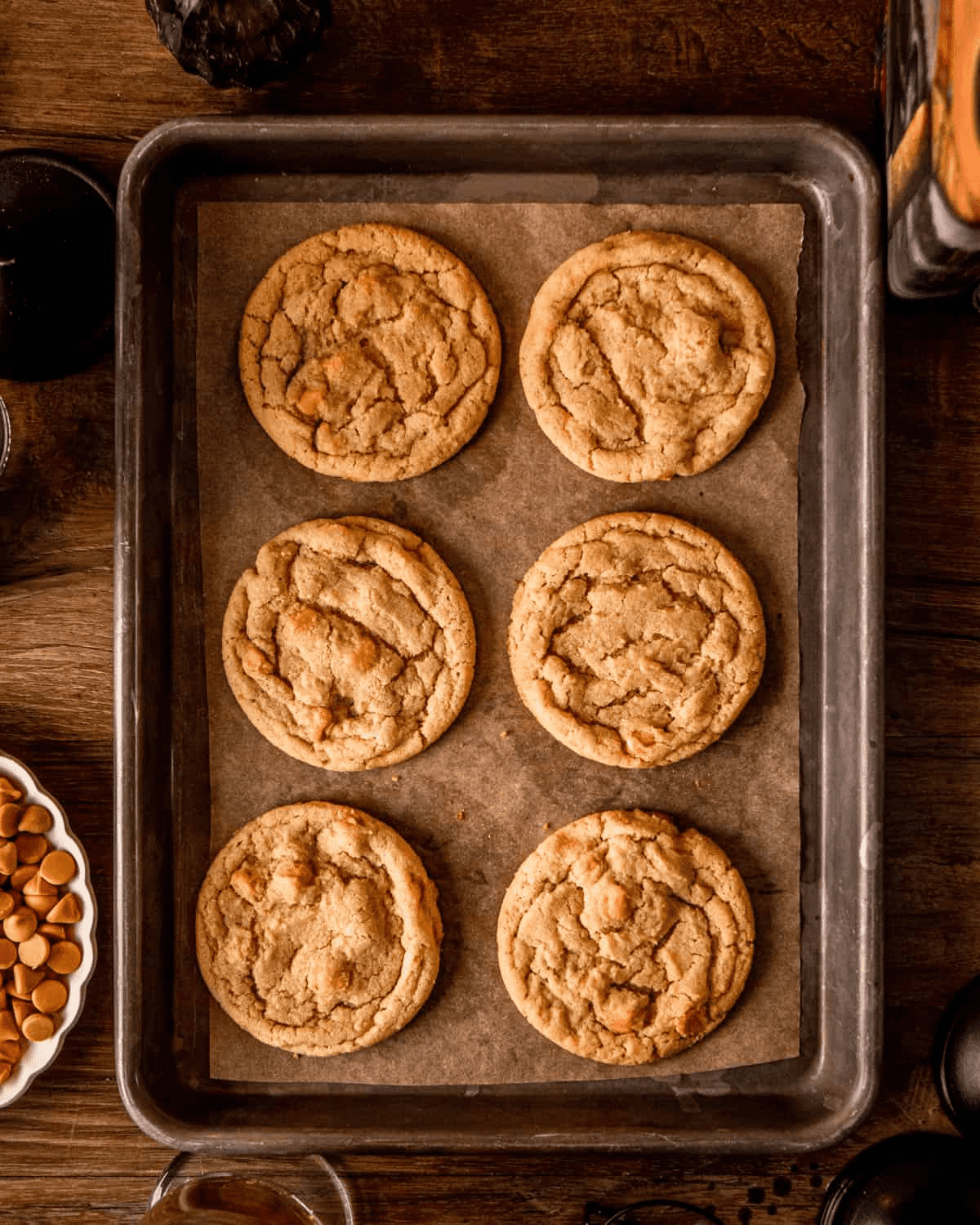
5 min + 25 min passiveLet the cookies rest on the sheet for 5 minutes — they're too soft to move right out of the oven. Transfer to a wire rack and cool completely (about 25 minutes) before frosting. Frosting a warm cookie melts the buttercream into a slick.
-
Make the buttercream (while cookies cool)
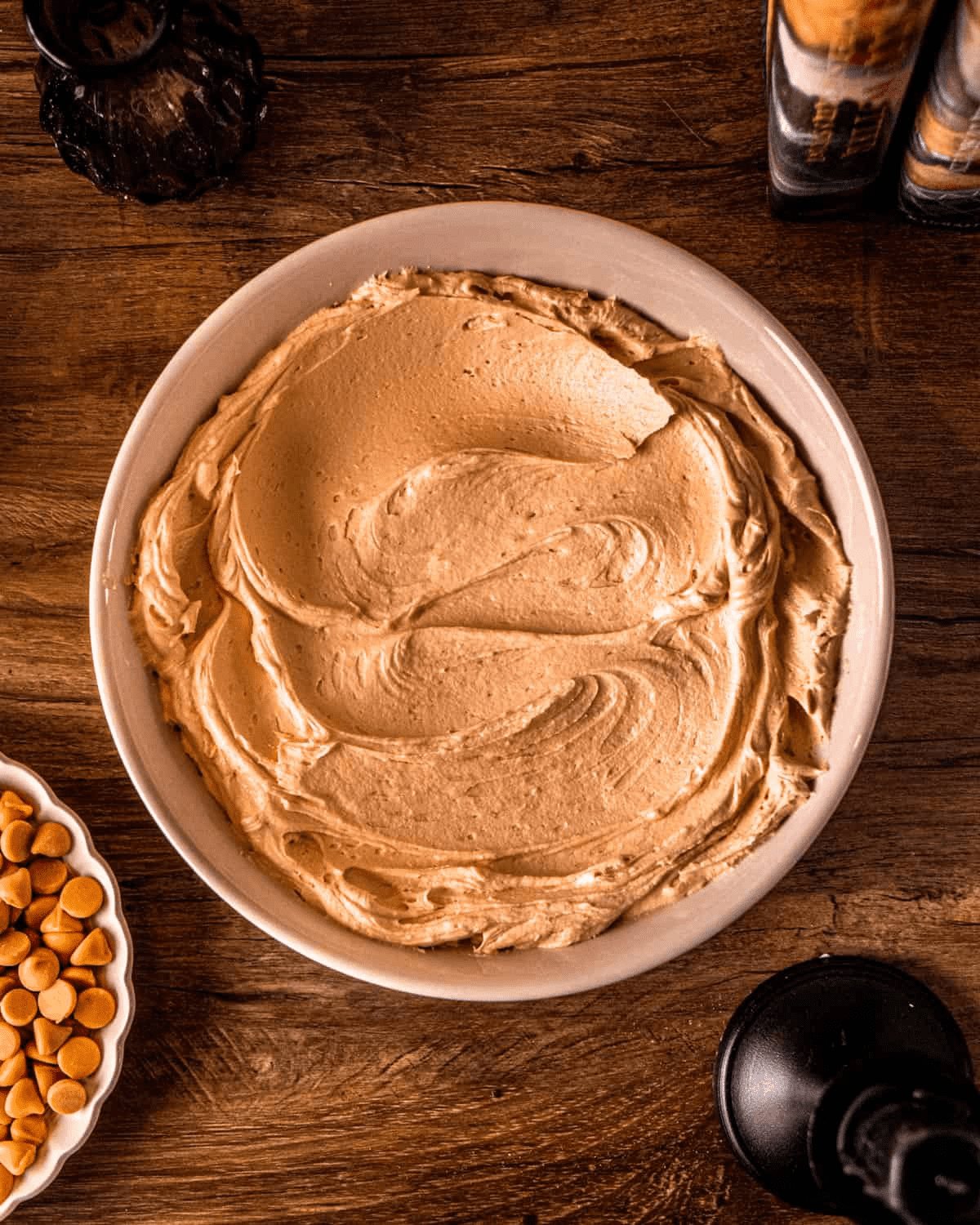
T+0:35Whip the ½ cup of softened butter with the ⅛ tsp salt on high speed until pale and fluffy — 5 to 10 minutes. Add the melted-and-cooled ½ cup butterscotch chips and beat until combined. Sift in the powdered sugar, then add the butter extract and vanilla. Beat until smooth. Cover until ready to use.
-
Reduce the butterbeer caramel
15–17 minIn a small saucepan, simmer the 12 oz of butterscotch beer over medium-low heat for 15–17 minutes — it should thicken to a syrup and turn deep golden. Don't walk away near the end; it goes from syrup to scorched fast. Off the heat, whisk in the butter, then the cream, then the pinch of salt. Return to low heat and simmer 1 minute to bring it together. Let cool to room temperature — it thickens further as it cools.
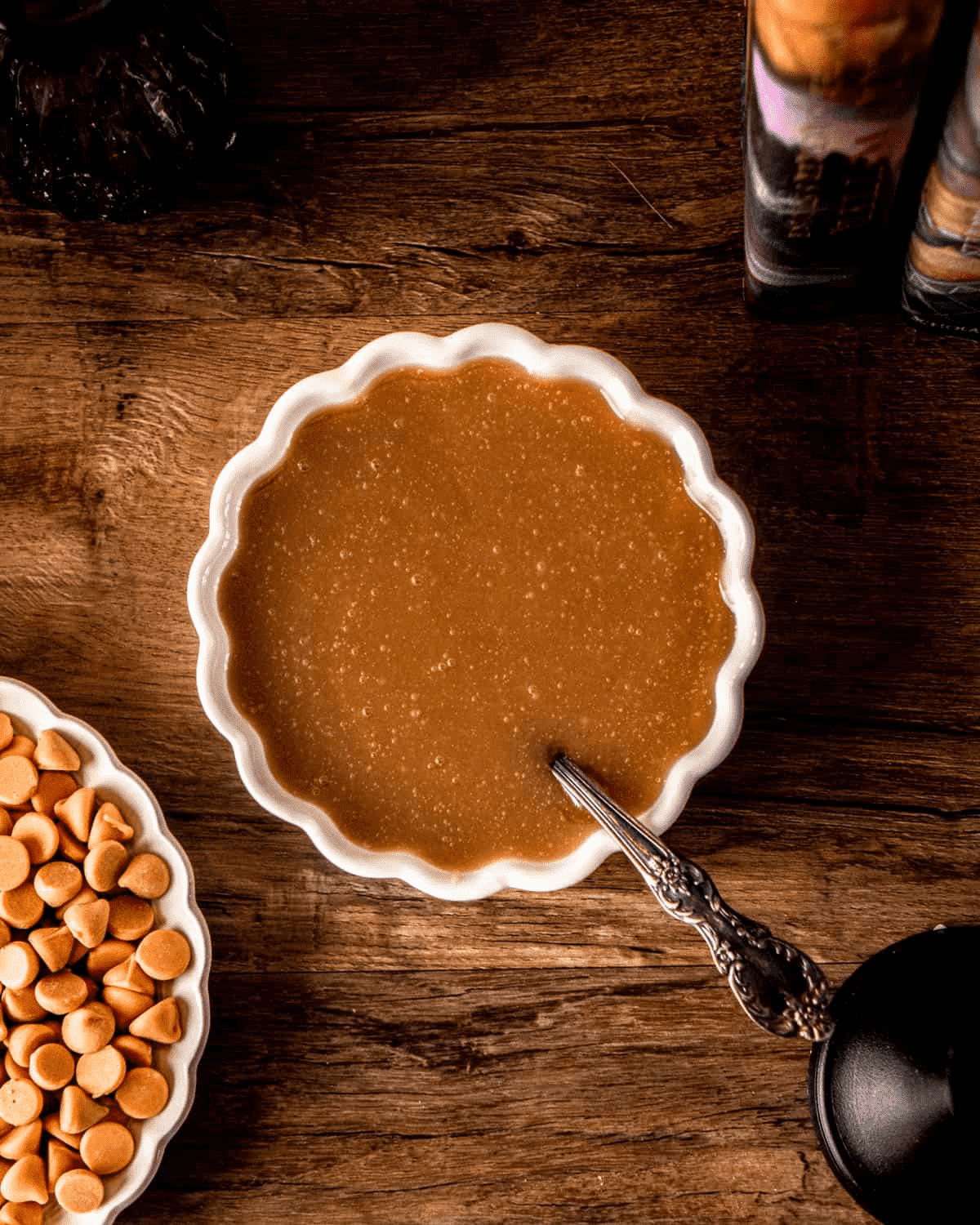
-
Frost, drizzle, sprinkle, serve
T+1:25Frost each cooled cookie with butterscotch buttercream using a mini offset spatula — a generous swirl, not a thin scrape. Drizzle butterbeer caramel over the top with a spoon. Hit with white and gold nonpareils while the caramel is still tacky so they stick. Serve same day for the softest texture; they keep 3 days in an airtight container.
Notes & swaps
Where to get Flying Cauldron butterscotch beer
It's the genuinely-correct ingredient and worth tracking down: Reed's Flying Cauldron Butterscotch Beer is sold at BevMo, Total Wine, World Market, and on Amazon. It comes in 4-packs of 12 oz bottles. If you can't find it, see the swap below.
Cream soda swap
Plain cream soda (A&W, Barq's, or Mug) is the standard substitute. The reduced caramel won't taste quite as butterscotch-forward, but it's still excellent. Bump the butter extract in the cookies from 1½ tsp to 2 tsp to compensate. Don't use diet cream soda — the sugar is what reduces into the caramel.
Why mostly brown sugar
Brown sugar has more moisture and acidic molasses than white sugar. Both translate to chewier, denser cookies that hold a bite. A 3:1 ratio of brown to white gives you chewiness without losing the snap of the edges. Going all-brown produces a flatter, almost fudgy cookie — not bad, but not the texture this recipe is after.
Why yolks only
Egg whites contribute structure and dryness; yolks contribute fat and richness. Two yolks, no whites means the cookies stay soft and chewy days after baking. Save the whites for meringue or a vegetable omelet — they keep 4 days in the fridge or freeze indefinitely.
Watch the caramel reduction
The soda-to-caramel reduction is the highest-risk step. Medium-low, not medium. Once the foam stops and the syrup starts thickening visibly (around the 12-minute mark), don't walk away — it can go from amber to burnt in under a minute. If you accidentally scorch it, start over; burnt caramel will taste burnt no matter what you add.
Make-ahead & storage
- Dough: Scoop into balls, freeze on a tray, then bag. Bake straight from frozen, add 1–2 minutes to the bake time.
- Frosted cookies: 3 days at room temperature in a single-layer airtight container. Don't stack — the buttercream will smear.
- Butterbeer caramel: Makes more than you need. Keeps 2 weeks in the fridge in a jar. Warm gently before drizzling on anything else (ice cream, banana bread, a spoon).
- Buttercream alone: 1 week refrigerated. Re-whip before using.
Source
Adapted from In Bloom Bakery's Harry Potter Butterbeer Cookies. The quantities, technique, and three-component structure are theirs — the kitchen-notebook presentation and the why-this-works notes are mine.
Discussion for this post
Letters, marginalia, and dispatches from fellow readers.
Likes, favorites, and comments are available for signed-in readers.
Comments
Be the first to drop a thought.